

How Much Do Custom Cabinets Cost in Huntsville, Alabama?
Why Custom Cabinet Pricing Varies So Widely
Custom cabinet pricing in Huntsville varies widely, but the reason is straightforward. Cost is driven primarily by how much cabinetry is being built and how it is designed and must take into account construction standards and installation methodology.
This is why one kitchen may cost $20,000 while another exceeds $60,000, even when the layout is similar. Give it a second look, and you’ll find the level of detail, number of accesories, and the quality of materials, finish, and installation are not equal.
In Huntsville and the surrounding North Alabama area, this variation is influenced by a mix of older and newer homes, evolving design expectations, and design preferences that includes taller cabinetry, more storage, and integrated features.
This article breaks down realistic local price ranges and explains what actually drives those numbers so you can evaluate whether custom cabinetry fits your project before getting deep into design.
Typical Custom Cabinet Cost Ranges in Huntsville
While every project is different, the ranges below reflect what homeowners and builders commonly see for professionally built and installed custom cabinetry in this market.
Custom Kitchen Cabinets
Most full kitchen projects in Huntsville fall between $20,000 and $60,000 or more, depending on scope and design.
Kitchens on the lower end tend to have more limited cabinet volume, fewer specialty storage features, and simpler layouts. Projects on the higher end typically include taller cabinetry, larger islands, integrated appliances, functional and decorative accessories, and more developed storage systems.
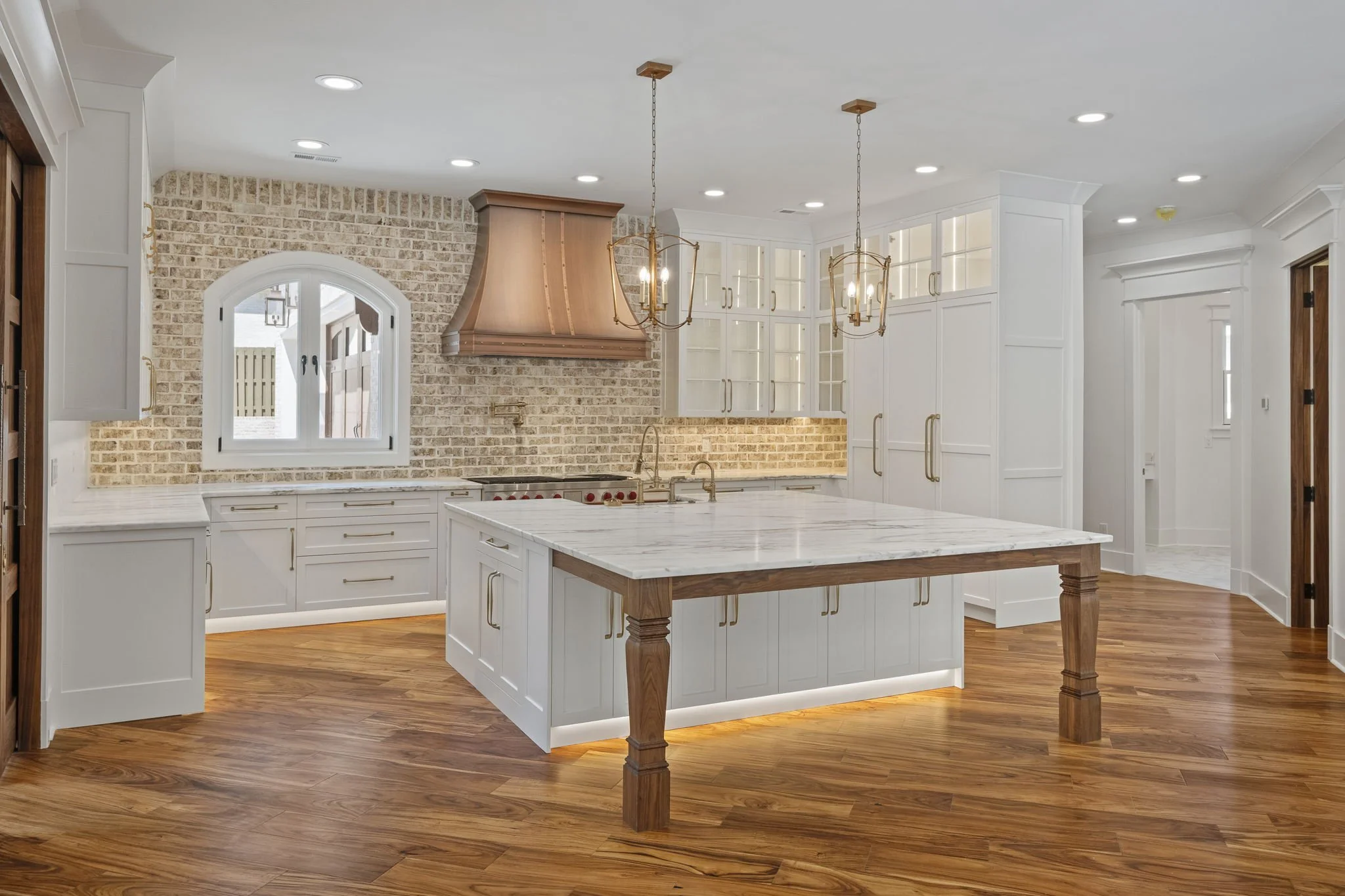
Full custom kitchen cabinetry with LED Lighting and integrated appliances after installation in a Huntsville home
Custom Bathroom Cabinets
Custom bathroom cabinetry typically ranges from $2,500 to $15,000, depending on size, layout, and level of detail.
Smaller single vanities with minimal storage fall on the lower end. Larger double vanities, primary bathrooms, drawer-heavy configurations, and matching linen storage increase scope.
While bathrooms are smaller than kitchens, they often contain a higher concentration of drawers and accessories, which can increase cost relative to their size.
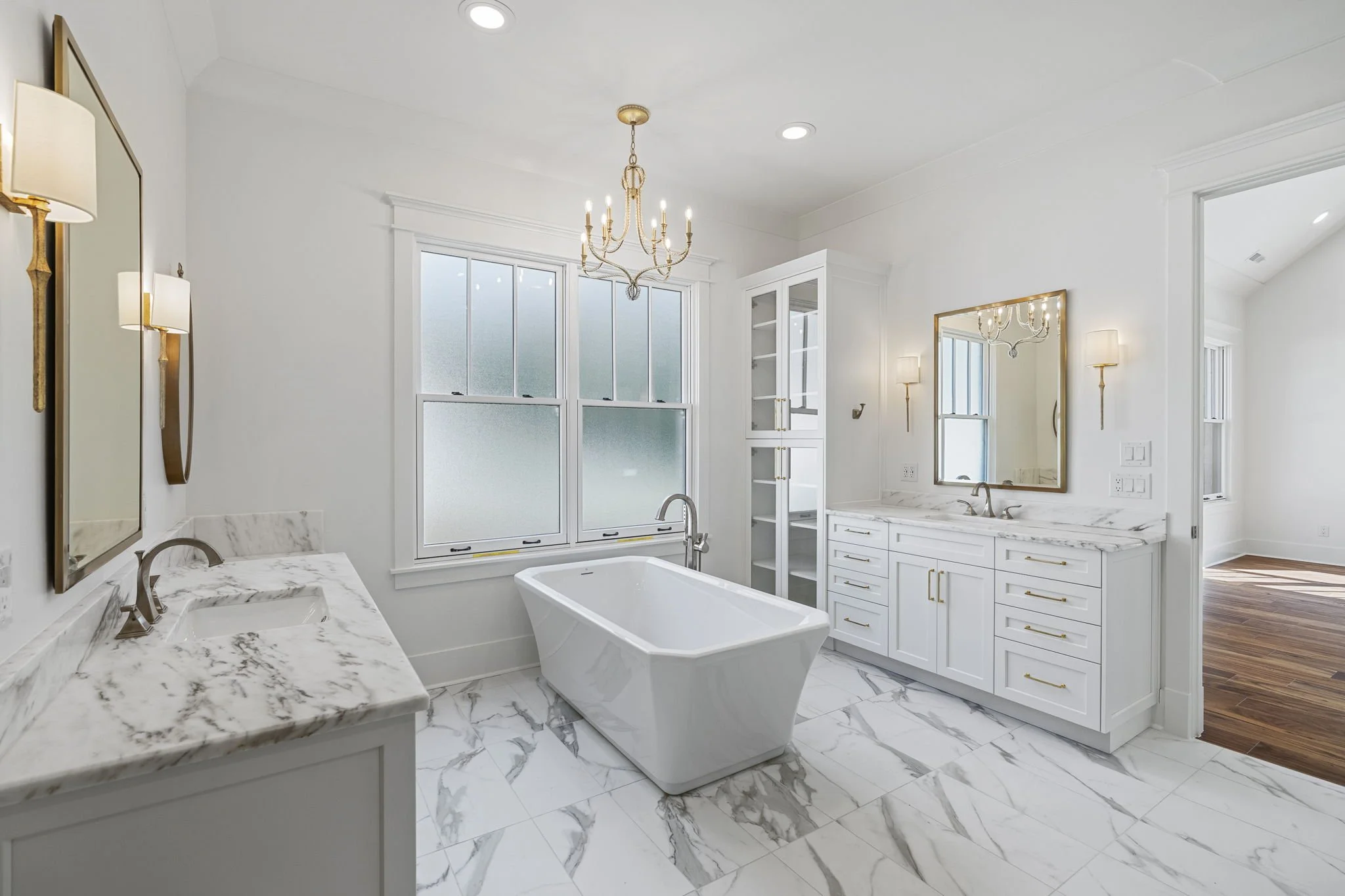
Custom bathroom vanities installed in a North Alabama new construction home
Built-Ins, Mudrooms, and Specialty Cabinetry
Built-ins vary significantly based on size and integration. A simple mudroom setup may begin around $5,000, while full wall systems for living rooms, offices, or media spaces can exceed $20,000.
In these cases, cost is driven by how much cabinetry is being built and how closely it is integrated into the surrounding space.
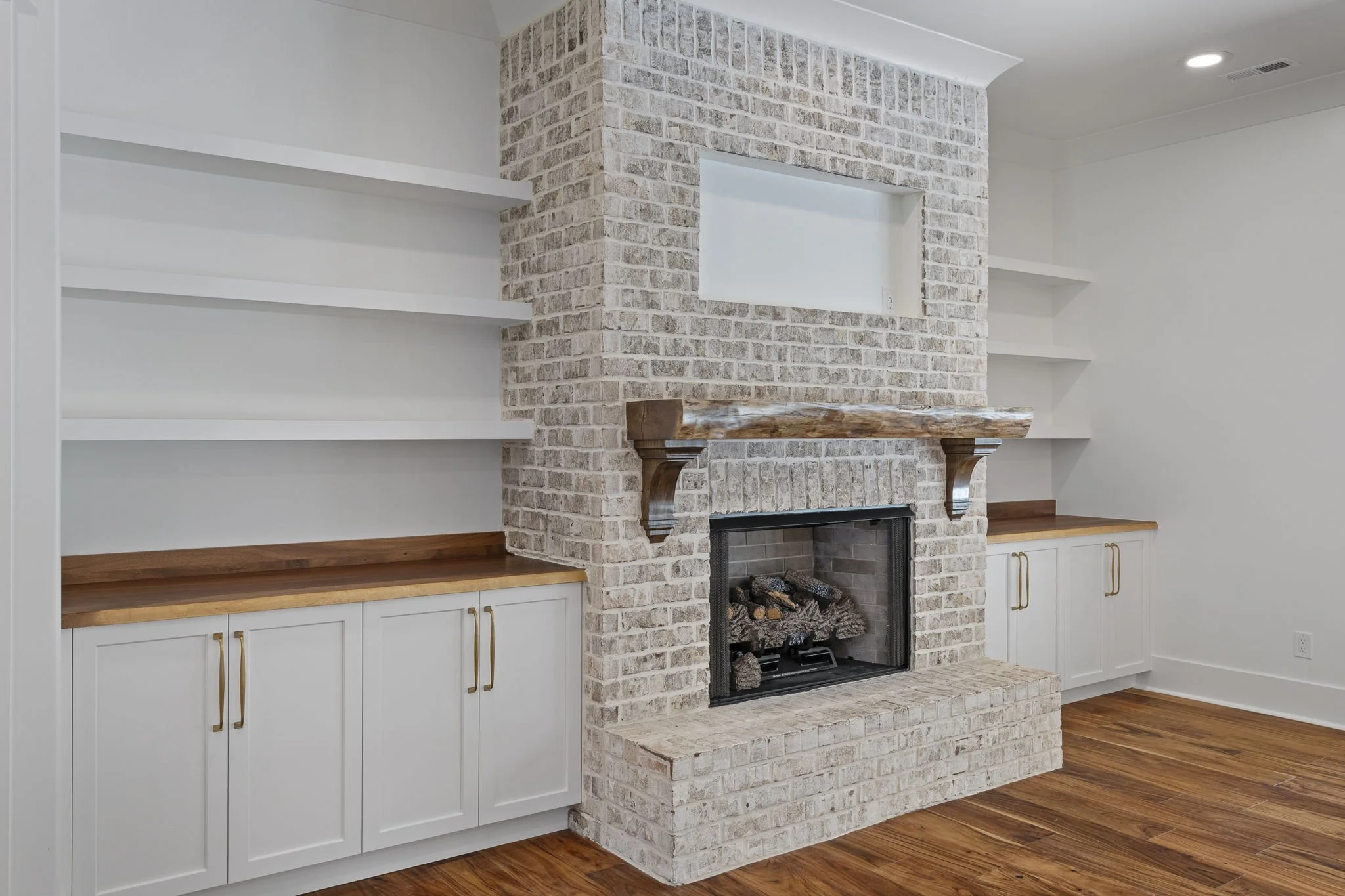
Living room built-in cabinetry with custom slab counters and integrated floating shelving
The Primary Drivers of Custom Cabinet Cost
In most projects, cabinet volume and design decisions account for the majority of cost variation. The sections below explain how those factors combine.
Volume of Cabinetry and Overall Scope
The most direct cost driver is how much cabinetry is required.
A kitchen with base and wall cabinets will cost significantly less than one with stacked uppers, tall pantry walls, and a large island. Extending cabinetry into adjacent spaces further increases scope.
More cabinetry means more material, more components, more finish work, and more installation time.
Design Decisions, Storage, and Accessories
Design decisions extend beyond layout and cabinet size. Interior functionality plays a major role in both usability and cost.
Drawer systems, pull-out storage, integrated trash and recycling, integrated lighting, rolling library ladders, spice pull-outs, tray dividers, and other accessories add components, hardware, and labor.
The frameless cabinetry offered by Wood and Plane is designed to support these systems efficiently, allowing for more flexibility and adjustment compared to face frame overlay or inset construction. This makes it well-suited for layouts that prioritize function and access.
As more of these features are incorporated, both material cost and installation complexity increase. A kitchen with minimal interior functionality will be structured very differently from one designed around integrated storage throughout.
Why Accessories Are Difficult to Add Later
Many interior cabinet features must be planned from the beginning. While some inserts can be added after installation, many integrated systems require specific cabinet dimensions and clearances.
Because of this, early decisions around storage and functionality tend to have a lasting impact on both cost and performance.
The most functional cabinets are designed right from the start, not added to later.
Built-Ins and Whole-Home Cabinet Integration
Built-ins are often treated as a separate scope from kitchen cabinetry. In many projects, they are sourced from a different supplier or constructed on-site.
These approaches can work, but they do not always align with the construction methods, finishes, or installation precision of the primary cabinetry. Differences in panel alignment, proportions, or finish quality can become noticeable when these elements share the same space.
When built-ins are designed and constructed as part of the same cabinet system, the result is more consistent in both appearance and function.
This level of integration increases scope and coordination, but it avoids the need to reconcile multiple systems during installation.
Construction Standards and Materials
Custom cabinetry varies significantly in how it is built. Cabinet thickness, joinery, back panels, hardware systems, and structural support all affect durability and precision.
Higher construction standards require more material and tighter tolerances. These choices influence long-term performance and how accurately cabinets can be installed.
Finish Type and Finish Requirements
Finish cost is influenced by both material and process. Certain finsih materials, colors, sheen levels, and substrates require additional preparation and controlled application.
Finish selection contributes to cost, but it typically follows scope and design in overall impact.
Installation Methodology and Execution Standards
Custom cabinetry is only as good as the system used to install it.
Homes in the Huntsville area present a range of conditions, but those conditions are not what drive cabinet cost. What matters is the installation methodology used to account for them.
A consistent installation process includes controlled leveling, support systems, sequencing, and final fit adjustments to ensure alignment, function, and durability.
This level of execution requires planning, time, and experienced labor. It is applied consistently across projects to ensure the finished cabinetry looks and performs as intended.
This is what allows cabinetry to read as intentional and cohesive in real homes, not dependent on ideal conditions.
Common Misconceptions About Cabinet Pricing
“It’s Mostly About Paint vs Stain”
Finish matters, but it is rarely the primary driver. Differences in scope and design typically account for a larger portion of cost variation.
“All Custom Cabinets Are Basically the Same”
Custom means built to order, not built to a uniform standard. Differences in construction and installation methods explain much of the variation in both cost and outcome.
“The House Is What Makes Cabinets Expensive”
Homes do not drive cabinet cost. The level of design, construction, and execution required to achieve a consistent result is what determines pricing.
Custom vs Semi-Custom vs Stock Cabinets in Huntsville
Stock cabinets work best when spaces align with standard sizes. Semi-custom cabinets allow some flexibility but still operate within predefined systems and can be limiting in application.
Custom cabinetry is built to the space and the design, which is particularly important in remodels and integrated layouts. It makes the most of the space and offers the most features and room for design.
For a direct comparison, see Custom Cabinets vs Semi-Custom vs Stock Cabinets (COMING SOON).
When Custom Cabinets Are Worth the Investment
Custom cabinetry is not always necessary, but it becomes the better solution when layout, storage requirements, or expectations for integration exceed what standard systems can accommodate.
It is particularly valuable when:
Storage efficiency is a priority
The design includes integrated appliances or full-height cabinetry
Built-ins are part of the overall plan
High demand for specialized accessories
A consistent, cohesive result across spaces is important
How to Think About Cabinet Pricing Early
The most productive early conversations focus on scope and priorities rather than exact numbers.
Pricing becomes more accurate when there is clarity around:
Storage needs, i.e. how much cabinetry is required
What materials, finsihes, and accessories are desired
How spaces connect beyond the primary spaces
Clear decisions early reduce revisions and lead to better outcomes.
Frequently Asked Questions
How much do custom kitchen cabinets cost in Huntsville?
Most kitchens fall between $20,000 and $60,000 or more depending on scope and design.
What increases cabinet cost the most?
Cabinet count and design decisions, including materials, finish, and accessories, typically have the largest impact.
Are accessories worth the added cost?
They often improve functionality significantly and should be considered early, as many are difficult to add later.
Why do built-ins vary so much in price?
Cost depends on size, level of integration, and whether they are designed as part of the overall cabinet system.
Do installation standards affect price?
Yes. A consistent installation methodology requires more planning and labor but ensures long-term performance and alignment.